葛
| ||||||||
Translingual
Han character
葛 (Kangxi radical 140, 艸+9, 12 strokes, cangjie input 廿日心女 (TAPV), four-corner 44727, composition ⿱艹曷)
References
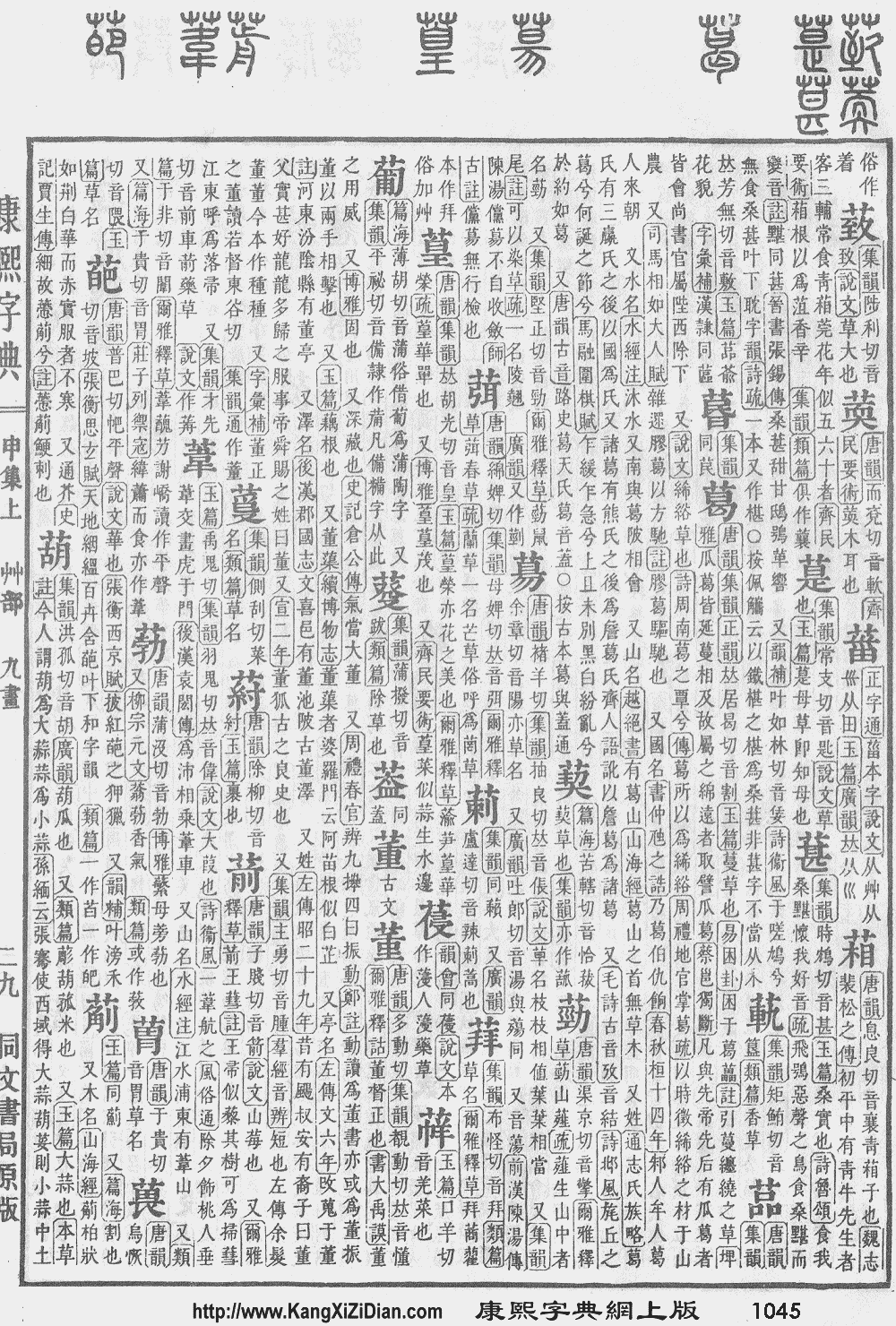
- Kangxi Dictionary: page 1045, character 10
- Dai Kanwa Jiten: character 31420
- Dae Jaweon: page 1506, character 6
- Hanyu Da Zidian (first edition): volume 5, page 3248, character 3
- Unihan data for U+845B
Chinese
| trad. | 葛 | |
|---|---|---|
| simp. # | 葛 | |
| alternative forms | 匂 | |
Glyph origin
| Historical forms of the character 葛 | |
|---|---|
| Shuowen Jiezi (compiled in Han) | Liushutong (compiled in Ming) |
| Small seal script | Transcribed ancient scripts |
Characters in the same phonetic series (曷) (Zhengzhang, 2003)
| Old Chinese | |
|---|---|
| 愒 | *kʰaːds, *kʰrads, *kʰrad |
| 馤 | *qaːds |
| 靄 | *qaːds, *qaːd |
| 餲 | *qraːds, *qrads, *ɡaːd, *qaːd |
| 喝 | *qraːds, *qʰoːb, *qʰaːd |
| 揭 | *kʰrads, *ked, *kʰrad, *ɡrad, *kad, *ɡad |
| 偈 | *ɡrads, *ɡrad |
| 猲 | *kʰob, *qʰaːd, *qʰad |
| 葛 | *kaːd |
| 輵 | *kaːd |
| 獦 | *klaːd, *rab |
| 渴 | *kʰaːd, *ɡrad |
| 嵑 | *kʰaːd |
| 暍 | *qʰaːd, *qad |
| 曷 | *ɡaːd |
| 褐 | *ɡaːd |
| 鶡 | *ɡaːd |
| 毼 | *ɡaːd |
| 蝎 | *ɡaːd |
| 鞨 | *ɡaːd, *ɢljad |
| 遏 | *qaːd |
| 齃 | *qaːd |
| 堨 | *qaːd |
| 擖 | *kʰreːd, *kraːd, *r'aːb |
| 楬 | *kʰraːd, *ɡrad, *ɡad |
| 朅 | *kʰrad |
| 藒 | *kʰrad |
| 竭 | *ɡrad, *ɡad |
| 碣 | *ɡrad, *ɡad |
| 羯 | *kad |
| 鍻 | *kad |
| 歇 | *qʰad |
| 蠍 | *qʰad |
| 謁 | *qad |
Phono-semantic compound (形聲/形声, OC *kaːd) : semantic 艹 + phonetic 曷 (OC *ɡaːd).
Pronunciation
Definitions
葛
Compounds
Pronunciation
Definitions
葛
- (dialectal Wu) this
- (Northern Wu, including Suzhounese) Alternative form of 個/个 (possessive particle)
Synonyms
Dialectal synonyms of 這 (“this”) [map]
Japanese
Readings
Etymology 1
| Kanji in this term |
|---|
| 葛 |
| かずら Grade: S |
| kun’yomi |
| Alternative spelling |
|---|
| 蔓 |
⟨kadura⟩ → /kad͡zuɾa/ → /kazuɾa/
From Old Japanese.
Noun
- Any creepers or creeping plants
- (architecture) This term needs a translation to English. Please help out and add a translation, then remove the text
{{rfdef}}. - the hoop of a barrel or other cylindrical object
- a type of fishing net
Derived terms
- 葛掛け (kazurakake)
- 葛縄 (kazuranawa)
- 葛引き (kazurahiki)
- 縁葛 (enkazura)
- 鉤葛 (kagikazura)
- さね葛 (sanekazura)
- 風船葛 (fūsen kazura)
- 屁糞葛 (hekusokazura)
Noun
葛 or 葛 • (kuzu)
Derived terms
Descendants
- → English: kudzu
Etymology 3
| Kanji in this term |
|---|
| 葛 |
| つづら Grade: S |
| kun’yomi |
⟨tudura⟩ → /t͡sud͡zuɾa/ → /t͡suzuɾa/
From Old Japanese.
Noun
葛 or 葛 • (tsuzura)
- Short for 葛藤 (tsuzurafuji): Chinese moonseed (Sinomenium acutum)
- Short for 葛籠 (tsuzurako): a wicker basket used for holding clothes
- Short for 葛折り (tsuzuraori): something winding or zigzaggy, especially a road at a hill-slope
- a style of 襲の色目 (kasane no irome, “color combination by layering of garments”), with bluish black on the front and light (or pale) blue on the back
Derived terms
- 葛箙 (tsuzuraebira)
- 葛笠 (tsuzuragasa)
- 葛切付 (tsuzura kittsuke)
- 葛帽子 (tsuzurabōshi)
- 革葛 (kawatsuzura)
- 熊葛 (kumatsuzura)
Korean
Etymology
From Middle Chinese 葛 (MC kat).
Miyako
Readings
- Kun: くずぃ (kudzï, 葛)
Etymology
| Kanji in this term |
|---|
| 葛 |
| くずぃ Grade: S |
| kun’yomi |
Cognate with Yaeyama 葛 (kuzï), Okinawan 葛 (kuji), and Japanese 葛 (kuzu).
Perhaps from Proto-Ryukyuan *kozu, itself from Proto-Japonic *konsu.
Pronunciation
- IPA(key): [kuzz]
Okinawan
Derived terms
- 葛固み (kujigatami)
Old Japanese
Etymology 1
Possibly from Proto-Japonic *kantura.
Derived terms
- 屎葛 (kuso₁kadura)
- さな葛 (sanakadura)
- さね葛 (sanekadura)
- 玉葛 (tamakadura)
Etymology 2
From Proto-Japonic *konsu.
Derived terms
Descendants
- Japanese: 葛 (kuzu)
Noun
葛 (tudura) (kana つづら)
- any climbing plant or vine, such as Chinese moonseed (Sinomenium acutum)
Derived terms
- 霜黑葛 (simotudura)
- 濱葛 (pamatudura)
Descendants
- Japanese: 葛 (tsuzura)
Vietnamese
This article is issued from Wiktionary. The text is licensed under Creative Commons - Attribution - Sharealike. Additional terms may apply for the media files.